
A scombrid related to tunas and mackerels, but a distinct species with the current California portal name Pacific Bonito.
Southern California fish guide
Pacific Bonito
Sarda chiliensis
- bonito
- bonita
- bonehead
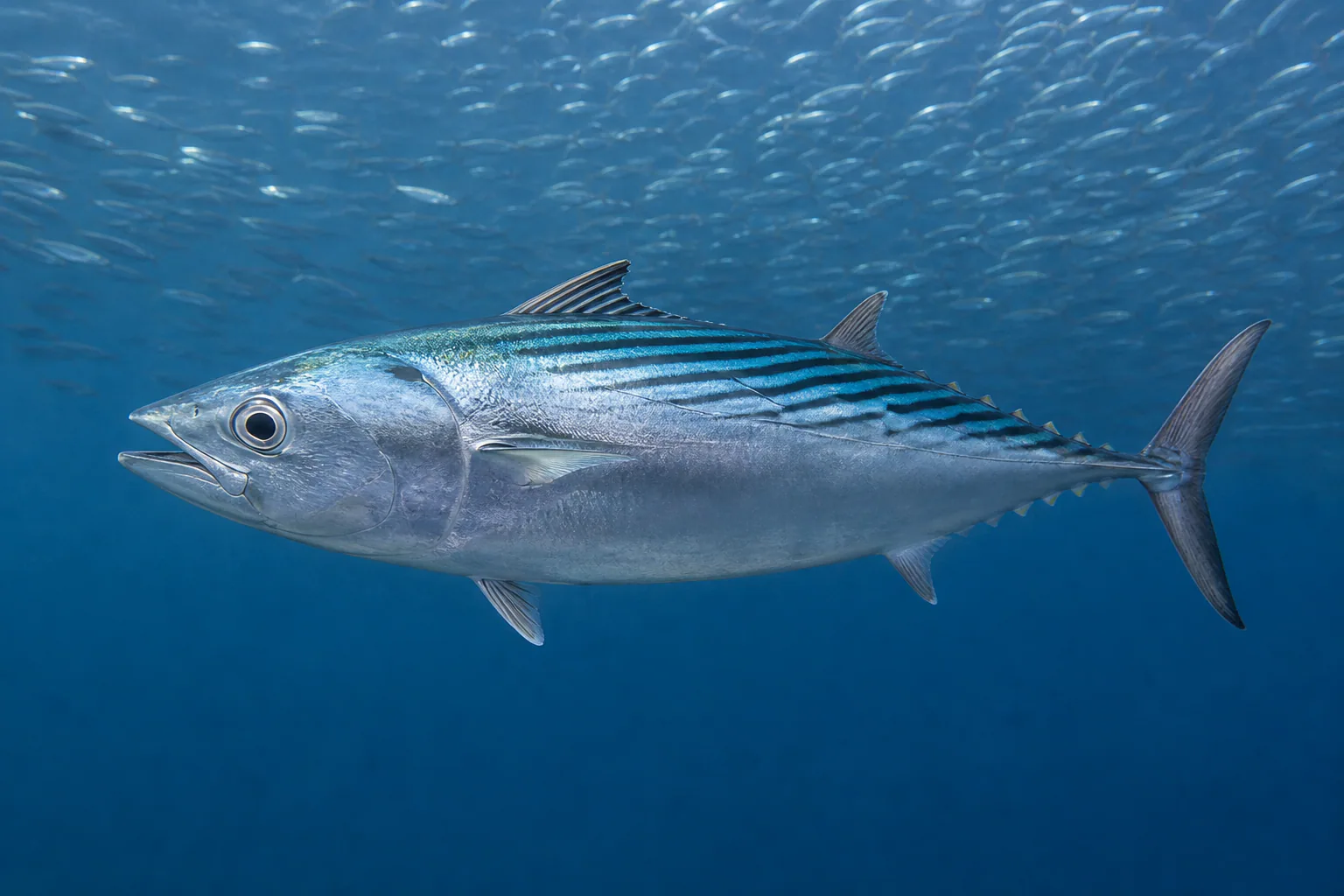
A fast coastal member of the tuna-and-mackerel family, Pacific bonito is read by its streamlined body, small finlets, and dark oblique stripes across the upper back.
How this guide is sourced, reviewed 2026-07-28, 8 records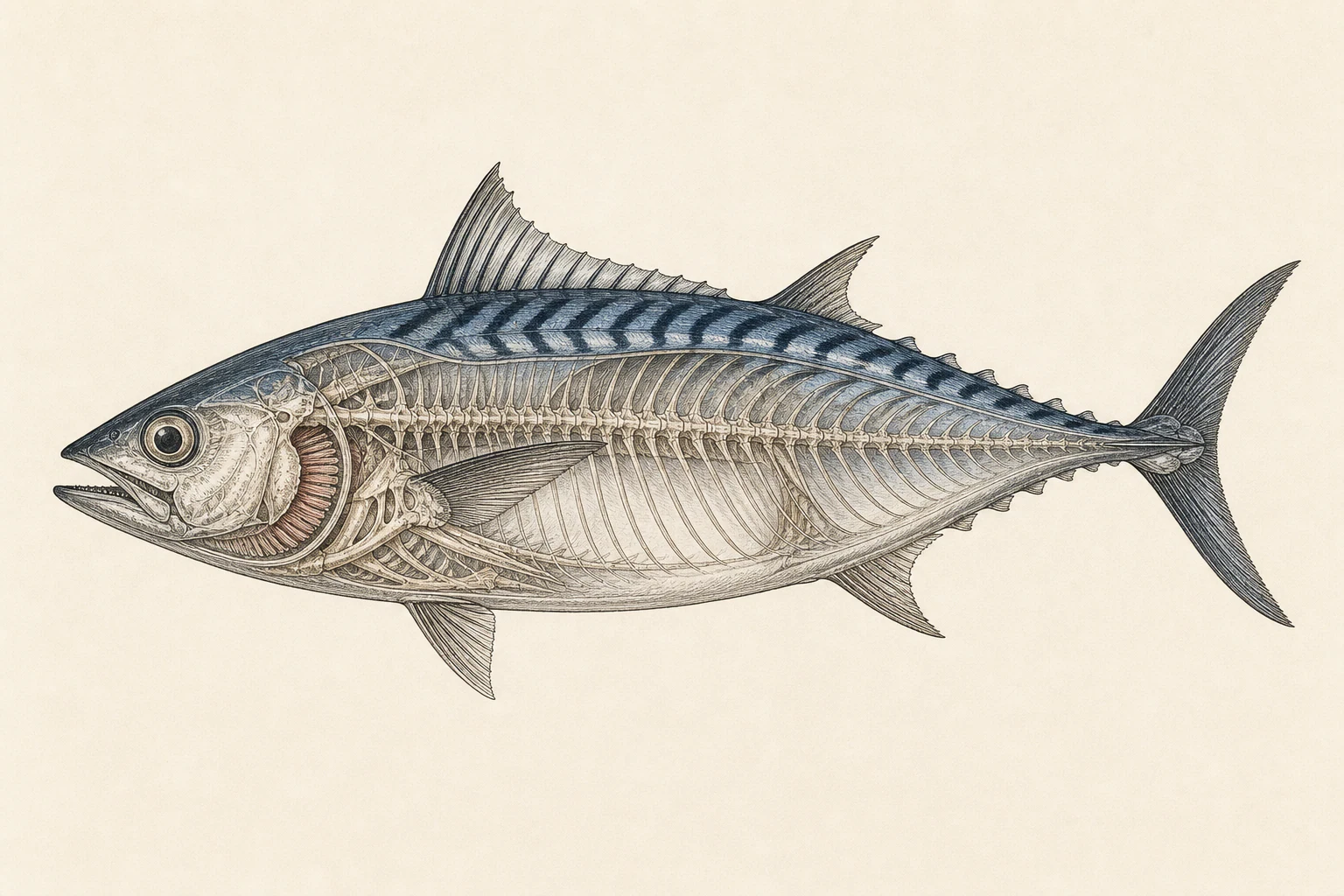
- Oblique back stripesDark diagonal stripes cross the blue upper back rather than running straight along the side.
- Tuna-like bodyThe body is compact and streamlined with a narrow tail base and small finlets.
- Shorter fins than yellowfinBonito lacks the long sickle-shaped yellow dorsal and anal fins of an adult yellowfin tuna.
See habitat reference
At a glance
Sources stay attached to every fact
A pelagic-neritic fish generally using the upper water column from the coast to offshore water, often around concentrations of schooling bait.
Documented foods include small schooling fishes, squid, and shrimp; northern anchovy is an important prey in California waters.
Pacific bonito has species-specific bag, undersized-tolerance, and fillet provisions. Verify the current regulation text before keeping or filleting fish.
A source-backed starting point
Bait & Tackle
Start here before you rig for Pacific Bonito. Adjust the final setup for depth, current, and local conditions.

What to offer
Natural & live bait
Not specified in the reviewed sources for this dossier.
Source gap

Fish guide
Quick answers with sources when you need them
Read multiple featuresIdentification & look-alikes
Dark diagonal stripes cross the blue upper back rather than running straight along the side. The body is compact and streamlined with a narrow tail base and small finlets. Bonito lacks the long sickle-shaped yellow dorsal and anal fins of an adult yellowfin tuna.
Use body shape, fin placement, color pattern, and the official California identification resources together. Never make a keep decision from one color mark or a count-category name alone.
Scale changes the silhouetteSize & growth
Match the forage classDiet

How the fish uses the waterBehavior

Start with structure and water columnHabitat & depth

Availability is not a promiseSouthern California seasonality
Decide before the fish reaches the railHandling & release
Use tackle strong enough to land the fish without an exhausting fight, and keep a dehooker or suitable release tool ready.
If releasing, dehook in the water when possible. Never gaff a fish you plan to release, keep air exposure brief, wet your hands, avoid eyes and gills, and support the body rather than hanging the fish by its mouth.
Face a sluggish fish into the current until it can swim away under its own power.
Snapshot checked 2026-07-28
California regulations
Pacific bonito has species-specific bag, undersized-tolerance, and fillet provisions. Verify the current regulation text before keeping or filleting fish.
Pacific bonito has species-specific bag, undersized-tolerance, and fillet provisions. Verify the current regulation text before keeping or filleting fish.
Review the general ocean regulations for possession, filleting, gear, protected-area, and boat-limit rules before departure.
Trip planning
Counts, trips, landings, and boats
Recent verified countsOpen the live count view. Missing source reports remain labeled, never converted to zero.
Current source status →Open tripsBrowse verified schedule inventory. Current beta inventory does not claim that a trip targets this species.
Targeting not yet verified →Landing sourcesInspect official count and schedule sources by Southern California landing.
Source directory →Boats reporting tripsSee boats present in verified schedule feeds. Species targeting is shown only when a source proves it.
Honest coverage →Source ledgerHow this guide is sourced8 records
- California Marine Species PortalCalifornia Department of Fish and WildlifeCurrent California common names, scientific names, and species aliases. Reviewed 2026-07-28.
- California's Marine Living Resources: Pacific BonitoCalifornia Department of Fish and WildlifeCDFW species and fishery profile used for Southern California seasonality, diet, and common fishing methods. Reviewed 2026-07-28.
- Sarda chiliensis species recordFishBaseSpecies database used for stable morphology, schooling behavior, habitat, and diet. Reviewed 2026-07-28.
- Southern Region ocean regulationsCalifornia Department of Fish and WildlifeOfficial current Southern Region season, size, bag, and possession summary. The page states it was updated July 1, 2026. Reviewed 2026-07-28.
- General ocean fishing regulationsCalifornia Department of Fish and WildlifeOfficial general limits, boat limits, gear rules, and fillet requirements. The page states it was updated July 24, 2026. Reviewed 2026-07-28.
- Marine Fish and Shellfish IdentificationCalifornia Department of Fish and WildlifeOfficial California identification hub, including rockfish groups and Southern California sport-fish references. Reviewed 2026-07-28.
- Catch and release fishing best practicesNOAA FisheriesOfficial handling and release guidance. NOAA states the page was updated September 3, 2025. Reviewed 2026-07-28.
- Ocean Sport Fishing hubCalifornia Department of Fish and WildlifeOfficial entry point for licenses, identification, current regulations, marine protected areas, advisories, and release guidance. Reviewed 2026-07-28.
Continue learning
Return to the guide for another fish, or open the latest count report for this species.